


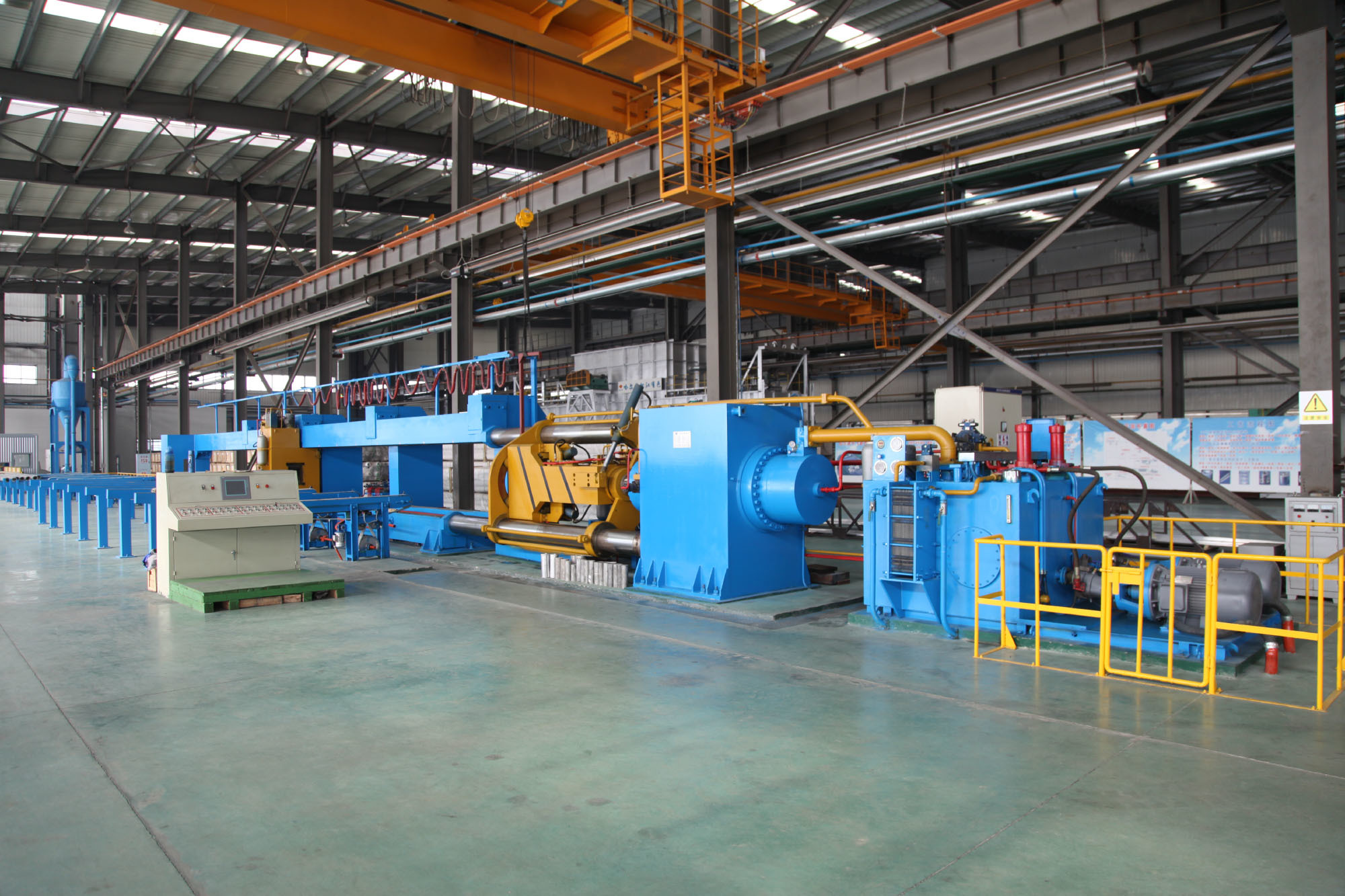
Covering the main grades of 1-7 series aluminum alloys, the products are high-precision seamless tubes, rods, profiles, drawn tubes, forgings, etc., widely used in new energy vehicles, aerospace, ships, UAVs, robots, security video surveillance, in-vehicle Internet of Things and other fields.
Why 7475 Aluminum Alloy is a Game Changer in Construction
Why 7475 Aluminum Alloy is a Game Changer in Construction Table of Contents Introduction to 7475 Aluminum Alloy Key Properties of 7475 Aluminum Alloy Strength and Durability: The Core Advantages Applications in the Construction Industry Sustainability and Environmental Impact Comparing 7475 Aluminum Alloy with Other Alloys Future Trends in Construction with 7475 Aluminum Alloy Frequently Asked Qu
Dec 19,2025
Why 7475 Aluminum Alloy is a Game Changer in Construction
Table of Contents
- Introduction to 7475 Aluminum Alloy
- Key Properties of 7475 Aluminum Alloy
- Strength and Durability: The Core Advantages
- Applications in the Construction Industry
- Sustainability and Environmental Impact
- Comparing 7475 Aluminum Alloy with Other Alloys
- Future Trends in Construction with 7475 Aluminum Alloy
- Frequently Asked Questions
- Conclusion
Introduction to 7475 Aluminum Alloy
The construction industry is continuously evolving, with materials playing a pivotal role in shaping modern architectural designs and structural integrity. Among the myriad of materials available, **7475 Aluminum Alloy** stands out due to its exceptional properties tailored for demanding construction environments. This alloy, primarily composed of aluminum, zinc, and small amounts of magnesium and copper, is engineered to meet the rigorous demands of contemporary construction projects.
In the coming sections, we will explore why 7475 Aluminum Alloy is increasingly being viewed as a game changer within the construction sector, offering unparalleled advantages in terms of strength, versatility, and sustainability.
Key Properties of 7475 Aluminum Alloy
7475 Aluminum Alloy is distinguished by several key properties that enhance its usability in construction:
1. High Strength-to-Weight Ratio
The combination of aluminum and zinc provides **7475 Aluminum Alloy** with a notably high strength-to-weight ratio. This characteristic allows engineers to design lighter structures without compromising on durability.
2. Excellent Corrosion Resistance
Another remarkable property is its resistance to corrosion. This feature is crucial for construction applications exposed to varying environmental conditions, ensuring longevity and reduced maintenance costs.
3. Formability and Machinability
7475 Aluminum Alloy exhibits excellent formability, making it suitable for various fabrication processes. It can be easily shaped and machined to meet specific design requirements, further expanding its application scope.
4. Thermal and Electrical Conductivity
While not as conductive as copper, 7475 Aluminum Alloy still offers sufficient thermal and electrical conductivity for many applications, making it versatile in different environments.
5. Weldability
Welding is often a critical component of construction. **7475 Aluminum Alloy** can be welded using traditional welding techniques, ensuring seamless integration within various structures.
Strength and Durability: The Core Advantages
The **strength and durability** of 7475 Aluminum Alloy position it as a preferred choice for a wide range of construction applications. Here’s why these attributes matter:
1. Enhanced Load-Bearing Capacity
Structures built with 7475 Aluminum Alloy can support significant loads, making it ideal for high-rise buildings, bridges, and industrial applications. The increased load-bearing capacity enhances safety and performance.
2. Resistance to Fatigue
Fatigue resistance is critical in construction materials, especially in applications subjected to repeated stress. 7475 Aluminum Alloy’s ability to resist fatigue ensures the integrity of structures over time.
3. Long Lifespan
With excellent corrosion resistance and durability, structures made with 7475 Aluminum Alloy can have a longer lifespan than those made with lesser alloys or alternative materials. This longevity translates to lower replacement and repair costs.
Applications in the Construction Industry
The versatility of **7475 Aluminum Alloy** enables its use across various construction applications. Here are some notable examples:
1. Structural Components
Used in beams, columns, and trusses, 7475 Aluminum Alloy offers the necessary strength while minimizing weight, enhancing structural efficiency.
2. Facade Systems
Architects are increasingly utilizing this alloy in facade systems due to its aesthetic appeal and ability to withstand weather conditions, ensuring that buildings remain visually striking and operationally sound.
3. Roofing and Cladding
Its lightweight nature and resistance to corrosion make 7475 Aluminum Alloy an optimal choice for roofing and cladding systems, contributing to energy efficiency and reducing thermal loads.
4. Reinforcements in Concrete
In reinforced concrete applications, 7475 Aluminum Alloy can be used as a structural reinforcing material, offering additional load-bearing capabilities without significantly increasing the overall mass.
5. Specialized Equipment and Tools
Construction equipment and tools often incorporate 7475 Aluminum Alloy due to its strength and lightweight properties, facilitating ease of use and improved handling.
Sustainability and Environmental Impact
Sustainability is a growing concern in the construction industry. The use of **7475 Aluminum Alloy** aligns with eco-friendly practices due to the following reasons:
1. Recyclability
Aluminum is one of the most recyclable materials, and 7475 Aluminum Alloy is no exception. It can be recycled without significant loss of properties, contributing to a circular economy.
2. Reduced Energy Consumption
The lightweight nature of 7475 Aluminum Alloy leads to reduced energy consumption during transportation and installation, minimizing the overall carbon footprint associated with construction projects.
3. Lower Resource Depletion
Utilizing high-strength materials like 7475 Aluminum Alloy can lead to thinner, more efficient designs, ultimately reducing the amount of raw material required for construction.
Comparing 7475 Aluminum Alloy with Other Alloys
Understanding how **7475 Aluminum Alloy** compares to other aluminum alloys can help stakeholders make informed decisions.
1. 6061 vs. 7475 Aluminum Alloy
While **6061 Aluminum Alloy** is widely known for its versatility and weldability, **7475** surpasses it in terms of strength, making it a better choice for high-stress applications.
2. 2024 vs. 7475 Aluminum Alloy
Although **2024 Aluminum Alloy** offers high strength, it lacks the corrosion resistance found in 7475. This makes 7475 a superior choice for construction environments where exposure to moisture or chemicals is a concern.
3. Cost Considerations
Typically, 7475 Aluminum Alloy may come at a higher upfront cost than other alloys, but its long-term benefits in terms of durability and reduced maintenance can justify the investment.
Future Trends in Construction with 7475 Aluminum Alloy
As technological advancements continue to shape the construction landscape, we anticipate the following trends related to **7475 Aluminum Alloy**:
1. Increased Use in Modular Construction
The growing trend of modular construction emphasizes the need for lightweight, high-strength materials. 7475 Aluminum Alloy's properties align perfectly with this trend, ensuring efficient prefabrication.
2. Smart Buildings
Smart building technologies require materials that can integrate seamlessly with sensors and other technologies. The adaptability of 7475 Aluminum Alloy makes it a prime candidate for future smart building designs.
3. Focus on Sustainable Practices
With an increasing focus on sustainability in construction, the eco-friendly attributes of 7475 Aluminum Alloy will likely lead to its wider adoption in projects aiming for certifications like LEED.
Frequently Asked Questions
1. What is 7475 Aluminum Alloy used for?
7475 Aluminum Alloy is used primarily in construction for structural components, facade systems, roofing, cladding, and specialized equipment due to its high strength and corrosion resistance.
2. How does 7475 Aluminum Alloy compare to 6061 and 2024 alloys?
While 6061 is versatile and weldable, 7475 offers superior strength. Compared to 2024, 7475 has better corrosion resistance, making it more suitable for construction applications.
3. Is 7475 Aluminum Alloy environmentally friendly?
Yes, 7475 Aluminum Alloy is recyclable, which contributes to sustainability. Its lightweight nature also reduces energy consumption during transportation and installation.
4. What are the benefits of using 7475 Aluminum Alloy in construction?
The benefits include a high strength-to-weight ratio, excellent corrosion resistance, durability, and increased energy efficiency in construction projects.
5. Can 7475 Aluminum Alloy be welded?
Yes, 7475 Aluminum Alloy can be welded using conventional techniques, making it suitable for various applications in construction.
Conclusion
In conclusion, **7475 Aluminum Alloy** emerges as a transformative material in the construction industry, combining strength, durability, and sustainability. Its unique properties make it ideal for a variety of applications, from structural components to aesthetic facades. As construction practices evolve towards more efficient and eco-friendly solutions, the role of 7475 Aluminum Alloy will undoubtedly expand, paving the way for innovative designs and sustainable building practices. Adopting this alloy not only enhances project performance but also contributes to a greener future in construction.
Latest Developments








If you are interested in our products, please leave your E-mail and we will contact you as soon as possible. Thank you!